
Concrete & Site Work
Poured, dug, graded, drained, torn out and put back.
Drainage & Irrigation
Water decides where everything else can go.
Falls, pipe and catch basins first, and irrigation repaired where it is broken.
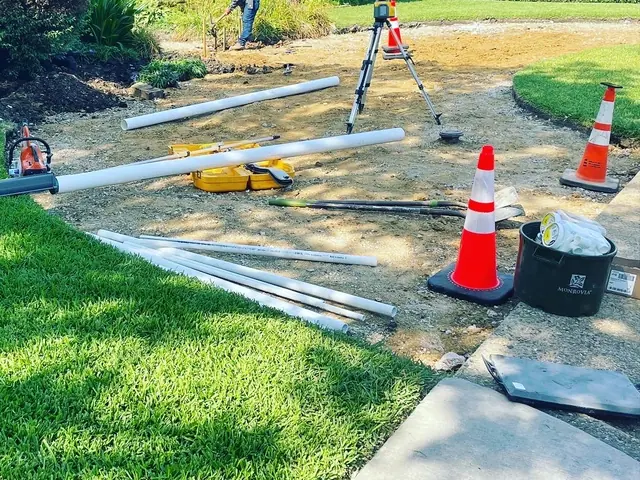
What gets set before anything is laid
- Levels taken across the whole area, not just where the work is
- Falls set away from the house and towards somewhere water can leave
- Pipe and catch basins run before the surface goes on top of them
- Sleeves under anything hard, so a line can be pulled through later
- Existing irrigation checked and repaired where the trenching finds it
Where does yours stand?
Tick what you have seen. It counts what you ticked and nothing more. Bring the list to the call: where the water sits is most of the diagnosis.
Concrete & Demolition
Somebody has to break out the old one first.
Breaking, hauling and pouring, including the finishes that go on top.
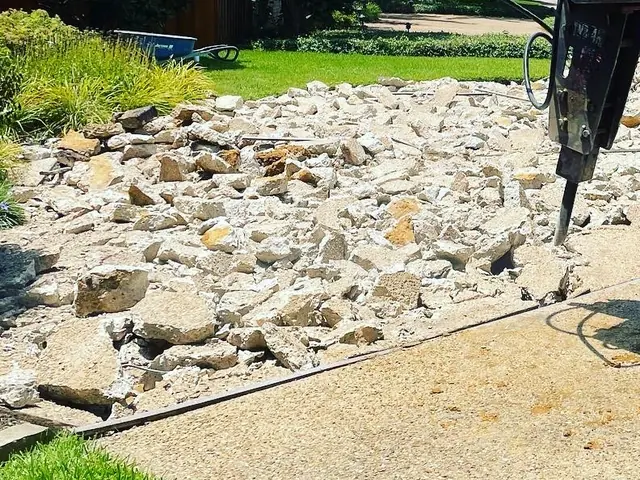
Break out, pour, finish
- Old slab broken, loaded and hauled off, not left in a pile
- Sub-grade compacted and falls checked before the forms go in
- Control joints cut where the slab is going to want to crack anyway
- Separation from the house and from anything it butts up to
- Finish applied while the pour is still workable, not afterwards
How the surface ends up
Our list says specialty concrete without naming finishes. These are the ones the trade covers: ask which one you want and we will say what your slab will take.
The standard, and there is nothing wrong with it. A brushed texture across the fresh pour gives grip in the wet and hides a lot. It is what most drives and aprons want.
Metal Buildings
The shop, the barn, and the slab underneath it.
Steel erection on ground that has been graded, drained and poured first.
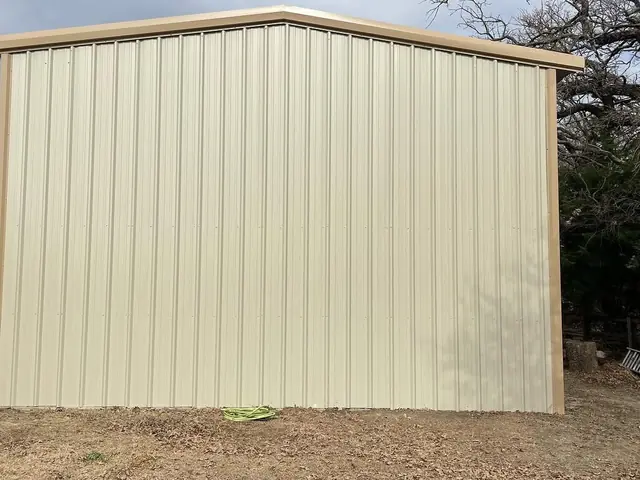
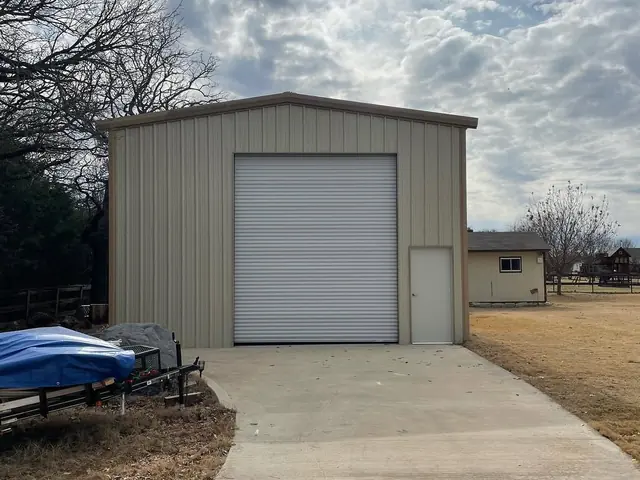
From bare ground to a closed building
- Pad cut and compacted, with the ground around it drained away from it
- Slab poured, with anchor bolts set to the frame rather than to a guess
- Frame erected, squared and braced
- Sheeting, trim and doors, which is where a building stops being a shell
- Apron poured out to the drive so vehicles can actually get in
The order it has to happen in
Every step here constrains the next one. Skipping ahead is what produces a building with a puddle at the door.
- 01Grade and drainThe pad has to sit above what is around it, and water has to have a way past. This is the step people skip and the one that floods a shop.
- 02SlabPoured to the building's footprint, with the anchor bolt layout set from the frame drawings rather than measured off the forms.
- 03Erect and sheetFrame up, squared and braced, then wall and roof sheeting, trim and the doors you actually need for what goes inside.
- 04Apron and approachConcrete run from the door out to the drive. A shop you cannot back a trailer into is a storage unit.
Questions
Questions people actually ask.
Drainage & Irrigation
Where does the water actually go?
That is the whole question, and it is answered on site. A pipe has to discharge somewhere real: a lower point on the property, a street, a swale. A run that ends in the middle of the yard has moved the puddle, not fixed it.
Can drainage be added after the patio is down?
Yes, and it costs more and looks worse than doing it first, because it means cutting into finished work. If any paving is planned, settle the water first.
Do you repair irrigation as well?
Irrigation repair is on our list, and it comes up naturally on a drainage job: a line that is broken or leaking is often the reason one area never dries out.
Concrete & Demolition
Can you pour over the existing slab?
Sometimes, if it is sound and the extra height does not foul a door or a threshold. If the slab underneath is moving, an overlay moves with it and cracks in the same place.
Why does new concrete crack?
Because all of it does, eventually. That is what control joints are for: they decide where it cracks so the slab breaks on a straight line you chose instead of across the middle. On this ground the joints matter more than the mix.
What do you do with the broken-out concrete?
It is loaded and hauled. Worth asking about at quote time, because removal and haul-off is real cost and real truck time, and a quote that leaves it out is not the cheaper quote.
Metal Buildings
Do you supply the building or just put it up?
Worth asking on the call. Plenty of these jobs are a customer-supplied kit set on a pad and slab the contractor builds, and either way the ground work is the part that decides how it turns out.
Does the slab have to be poured before the steel arrives?
Yes, and it has to cure. The anchor bolts are set in the pour and the frame lands on them, so the sequence is not negotiable and the delivery date has to allow for it.
Can the apron be done at the same time?
It is usually better done after the building is up, so the concrete is not taking machine traffic while it is green. It should still be priced at the same time, because it is the difference between a building and a usable one.
Concrete & Site Work
Poured, dug, graded, drained, torn out and put back. Send photos of the space and someone will come and look at it.