
Walls, Fences & Shade
The parts of a yard that stand up out of the ground.
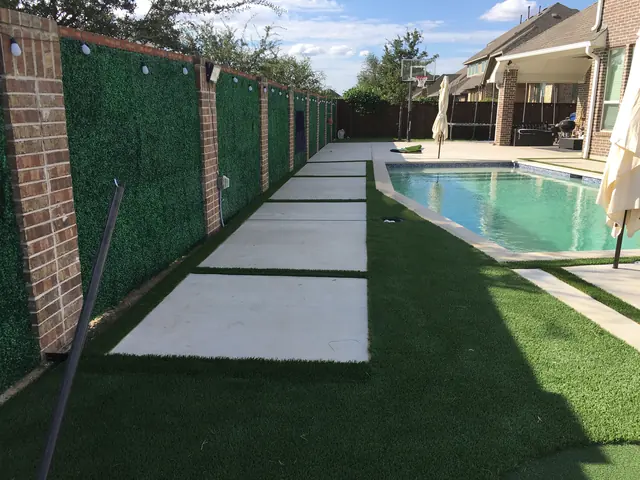
Retaining & Seat Walls
A wall is a drainage job that happens to hold soil.
Block and stone walls built on a compacted footing, drained behind.
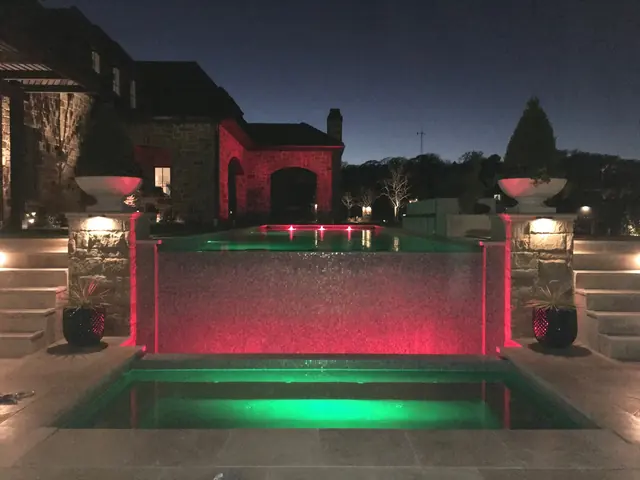
What is behind the face
- A compacted footing, with the first course set below finished grade
- Drainage stone against the back of the wall, full height
- A perforated pipe at the base with somewhere real to discharge
- Backfill compacted in layers as the wall goes up
- Caps set to shed water forward, off the wall rather than into it
Built from the bottom, in this order
Four of these five steps are buried by the time the wall is finished. They are also the four that decide whether it is still standing straight in fifteen years.
- 01Dig and compact the footingBelow finished grade, wider than the wall, and compacted. The first course is set into it rather than onto the ground, so nothing can slide out at the bottom.
- 02Set the base courseThe slowest course and the one everything else inherits. Every block after it is only as level as this one, which is why it is worth watching.
- 03Stone and pipe behind itClean drainage stone against the back, full height, and a perforated pipe at the base running to somewhere water can actually leave.
- 04Backfill in layersBuilt up and compacted as the wall rises, not dumped in at the end. Soil pushed in loose settles later, and a wall settles with it.
- 05Caps and stepsCaps set to throw water forward off the wall. Any steps through it are built into the wall as it goes up rather than added against it afterwards.
Fences & Screens
Privacy, a property line, or both.
Cedar privacy fence, capped and trimmed, plus repairs to what is standing.
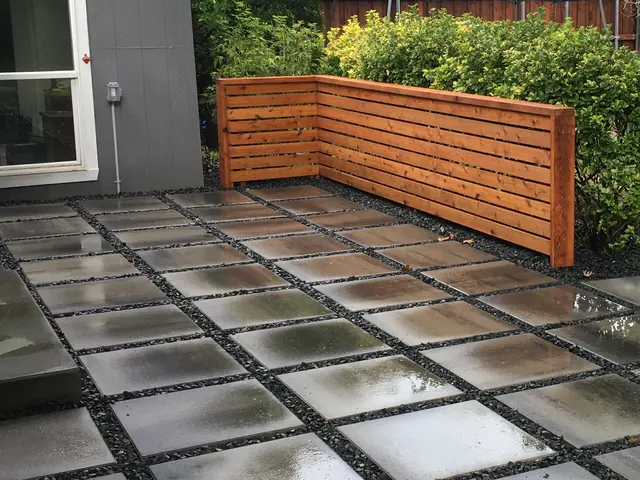
What the run is made of
- Post holes dug to depth and set, spaced to the run rather than to a round number
- Rails fixed to the posts, boards fixed to the rails
- A cap and trim on top, which is what makes a fence read as finished
- A gap at the bottom so the boards are not standing in dirt
- Gates hung last, on posts sized for the swing they will take
Three versions of the same trade
We do all three, and two of the three are in our own photographs. Which one you want changes the price far more than the choice of board does.
New privacy run
- Full height, boards butted, capped and trimmed
- Everything is new, so nothing is inherited
- The line and the gate can move while it is being set out
- The most material and the most post holes
- Property line questions have to be settled first
- New cedar goes silver unless it is kept
Horizontal screen
- A deliberate piece of the yard rather than a boundary
- Short runs: a patio edge, a bin store, equipment
- Reads as built rather than as fencing
- More framing per foot than a vertical run
- Not a privacy solution for a whole boundary
- Wants a straight, level base to look right
Repair what is standing
- Sound posts and tired boards is a board job, not a fence job
- Keeps a weathered run matching itself
- By far the cheapest of the three
- A leaning post has to come out, not be braced
- New boards will not match old ones for a year or two
- There is a point where it is throwing money at it
Solid marks are the case for it, gray marks the cost of it. Both are real; which one wins depends on the property.
Pergolas & Shade
In a north Texas summer, shade is the whole difference.
Steel and timber shade frames, set over the deck you already paid for.
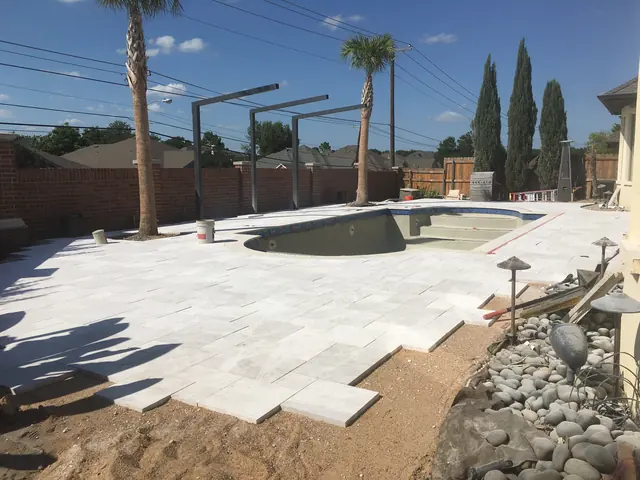
What it takes
- Post positions set against the deck layout, before the deck is closed up
- Footings sized for wind, not just for the weight of the frame
- Frame squared to the house and to the deck below it
- A cover picked for what you want: full shade, part shade or open
- Power run for a fan or lights while the ground is still open
What the frame is made of
Steel frames are what the pool deck in our gallery has over it. Cedar is the other half of the trade. Pick a swatch to read the trade-off.
Thin sections, long spans and very little visual weight, which is what the frames on our own pool deck job are. Powder coated black holds up in this sun and does not need doing again in three years.
Questions
Questions people actually ask.
Retaining & Seat Walls
How high can a wall go before it needs engineering?
There is a height at which a wall stops being a landscape item and becomes a structure, and it varies by jurisdiction. Ask early, because it changes the footing, the reinforcement and whether a permit is involved.
Can a wall be built against the property line?
It can, and it is where most disputes start. Where it sits, which way it drains and who maintains the back of it are worth agreeing with a neighbor before anything is dug.
What does the pipe behind the wall connect to?
Somewhere water can actually leave. A pipe that runs to a dead end behind the wall is worse than no pipe, because it collects the water and holds it exactly where you did not want it.
Fences & Screens
Privacy fence or horizontal screen?
Privacy is a vertical run of boards, full height, and it is what most of a property line wants. A horizontal slat screen is a shorter, more deliberate piece: a patio edge, a bin store, something to hide equipment. Both are in our photographs.
Can you repair what is standing instead of replacing it?
Fence install and repair are both on our list, so it is a fair question to open with. Sound posts and tired boards is a board job. Leaning posts is a post job, and that is the one worth doing properly.
Do you stain it?
Cedar goes silver if it is left, which some people want. If you want it to stay the color it is the day it goes up, say so early, because new cedar has to dry out before anything is put on it.
Pergolas & Shade
Does it have to be anchored into the patio?
The posts have to go down to something solid. Setting them on their own footings while the deck is still open is the clean way. Bolting to the top of a finished surface is possible, and it is the version that comes loose first.
Will it actually shade the seating?
Only if it is positioned for where the sun is at the hour you use the yard, which for most people is late afternoon. That is a five-minute conversation on site and it changes where the posts go.
Can lighting or a fan be run to it?
Yes, and the time to do it is before the surface goes down. Running power to a finished deck means cutting it up.
Walls, Fences & Shade
The parts of a yard that stand up out of the ground. Send photos of the space and someone will come and look at it.